Open for Freelance & Projects
f in yt wp

Category: WordPress Security

WordPress Security
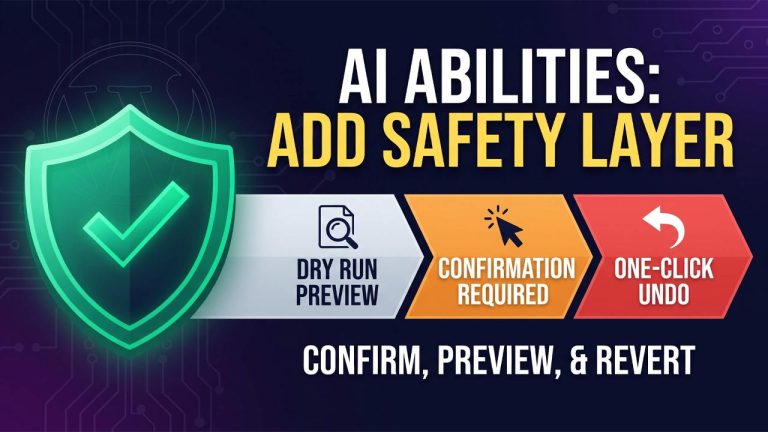
WordPress AI Safety Layer: Add Confirmation Prompts, Dry Runs & Undo to AI Abilities

WordPress AI Safety Layer: Add Confirmation Prompts, Dry Runs & Undo to AI Abilities The WordPress Abilities API gives plugins, themes, and external AI clients—such as MCP tools and browser extensions—a structured registry to discover and execute site actions. A model can draft posts, update metadata, clean up stale records, or adjust WooCommerce settings in […]

WordPress Security
Securing WordPress AI REST & MCP Endpoints Against Prompt Injection & Billing Attacks

Connecting WordPress to Large Language Models via custom REST endpoints or the official WordPress MCP Adapter opens up powerful automation—from AI search assistants to automated content auditing. However, exposing an LLM-backed endpoint on the public web introduces two severe risks that traditional WordPress firewalls do not stop: indirect prompt injection (where untrusted post content or […]

WordPress Security
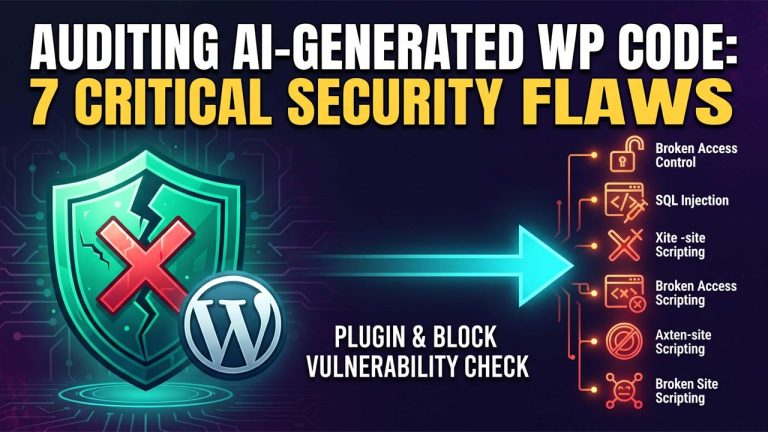
Auditing AI-Generated WordPress Code: 7 Critical Security Flaws in Plugins & Blocks

AI coding assistants like Cursor, Claude Code, and GitHub Copilot can scaffold a working WordPress plugin or custom Gutenberg block in minutes. The danger is that Large Language Models optimize for code that compiles and runs—not code that survives hostile production traffic. Over 90% of WordPress security breaches originate in plugins and themes rather than […]

WordPress Security
WordPress Secrets API Tutorial: How to Encrypt & Secure AI API Keys (Stop Using wp_options)

For over a decade, WordPress plugin developers have had no standardized, encrypted way to store sensitive API keys, OAuth client secrets, or webhook tokens. When site administrators paste an OpenAI, Gemini, or Stripe secret key into a plugin settings screen, almost every plugin calls update_option()—saving that credential in plain text inside the wp_options table. That […]